It must have been snowing all night
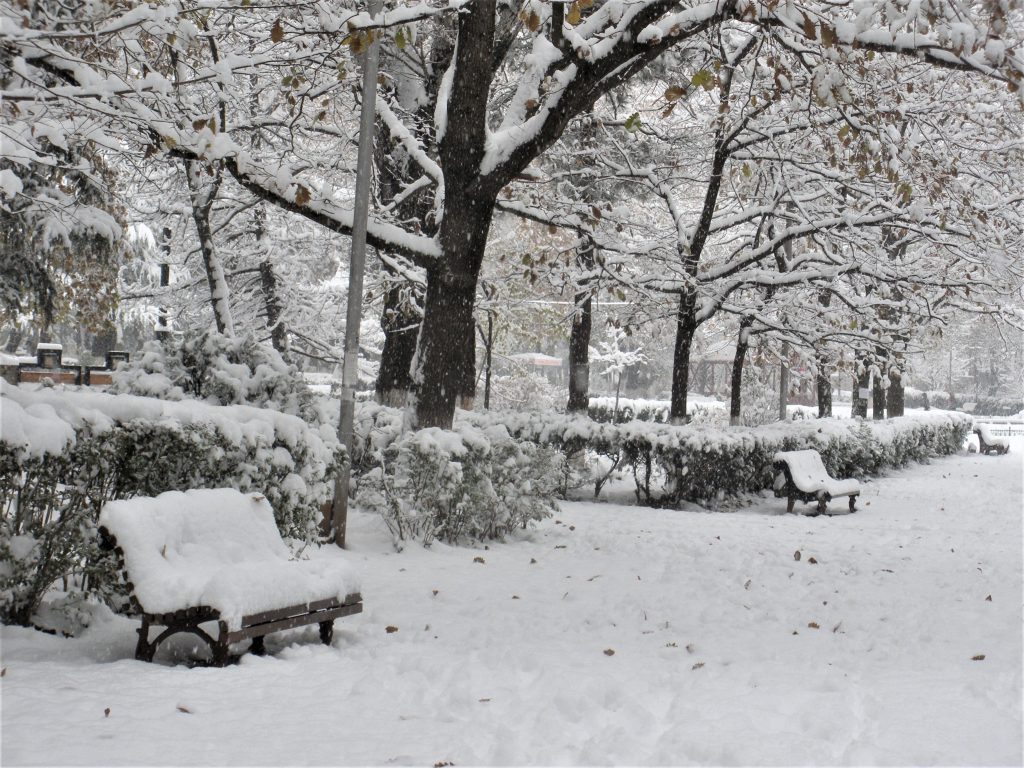
It must have been snowing all night. The snow is piled three inches deep and still it falls steadily, purposefully; in the States we would say “it’s really coming down.” How I wish I understood Georgian, because I would love to hear what the local news has to say this morning about the weather.
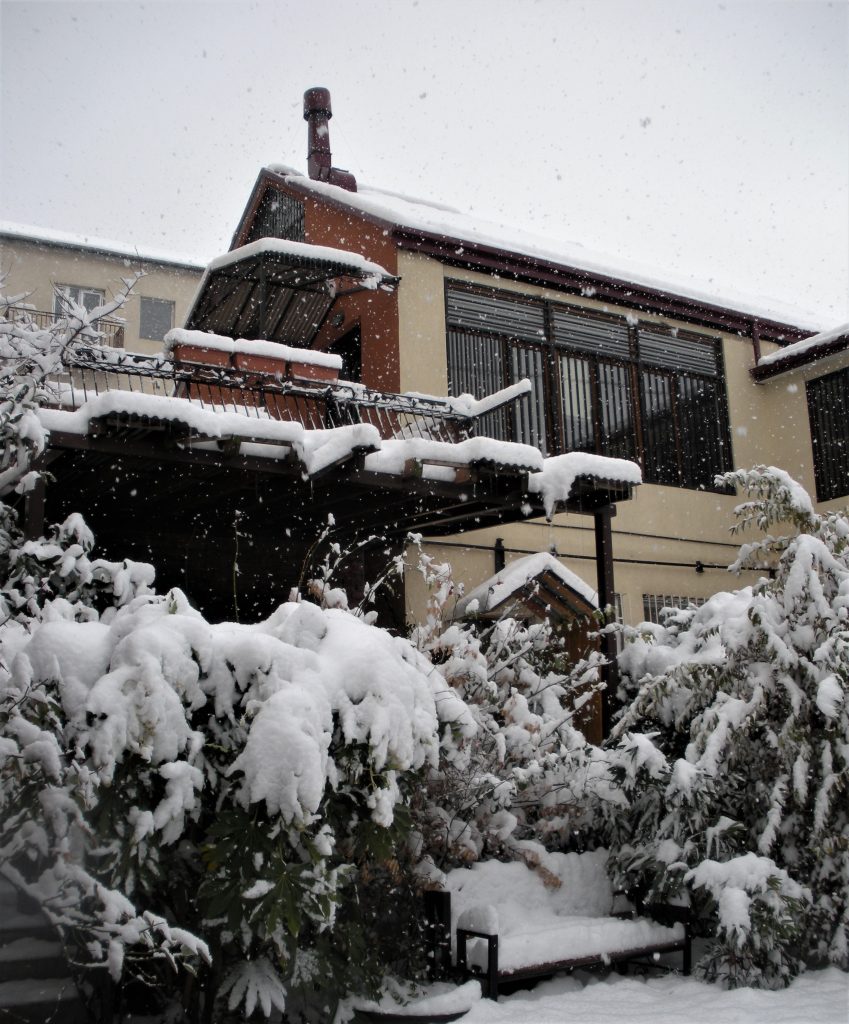
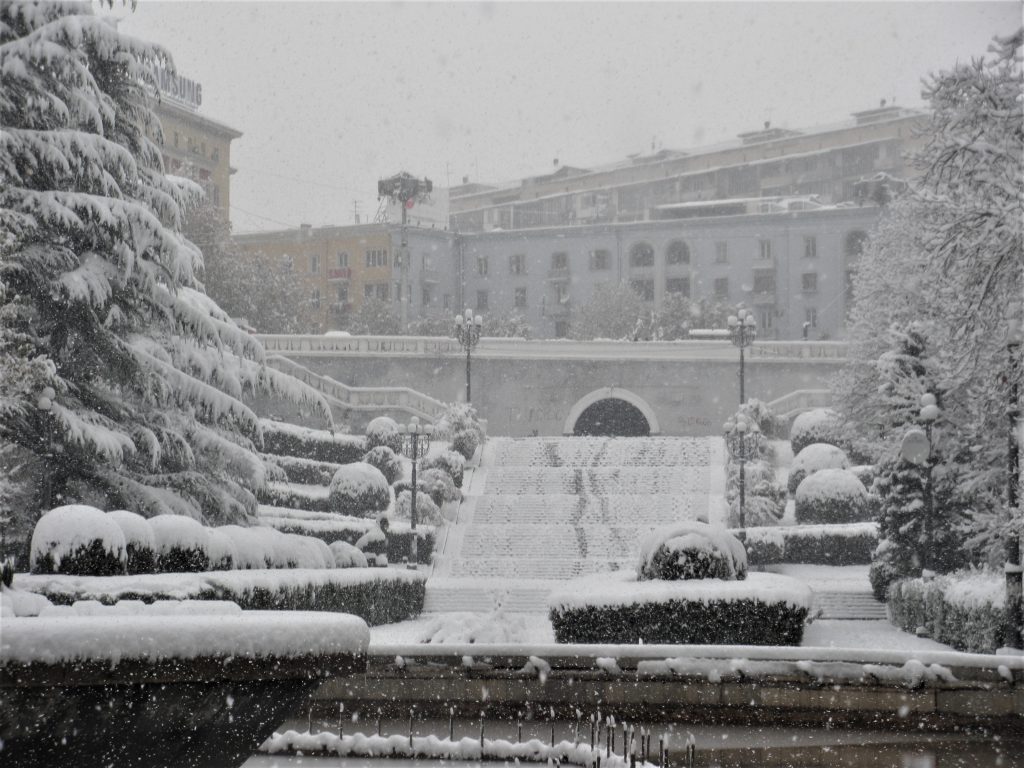
Grand entrance to Vake Park

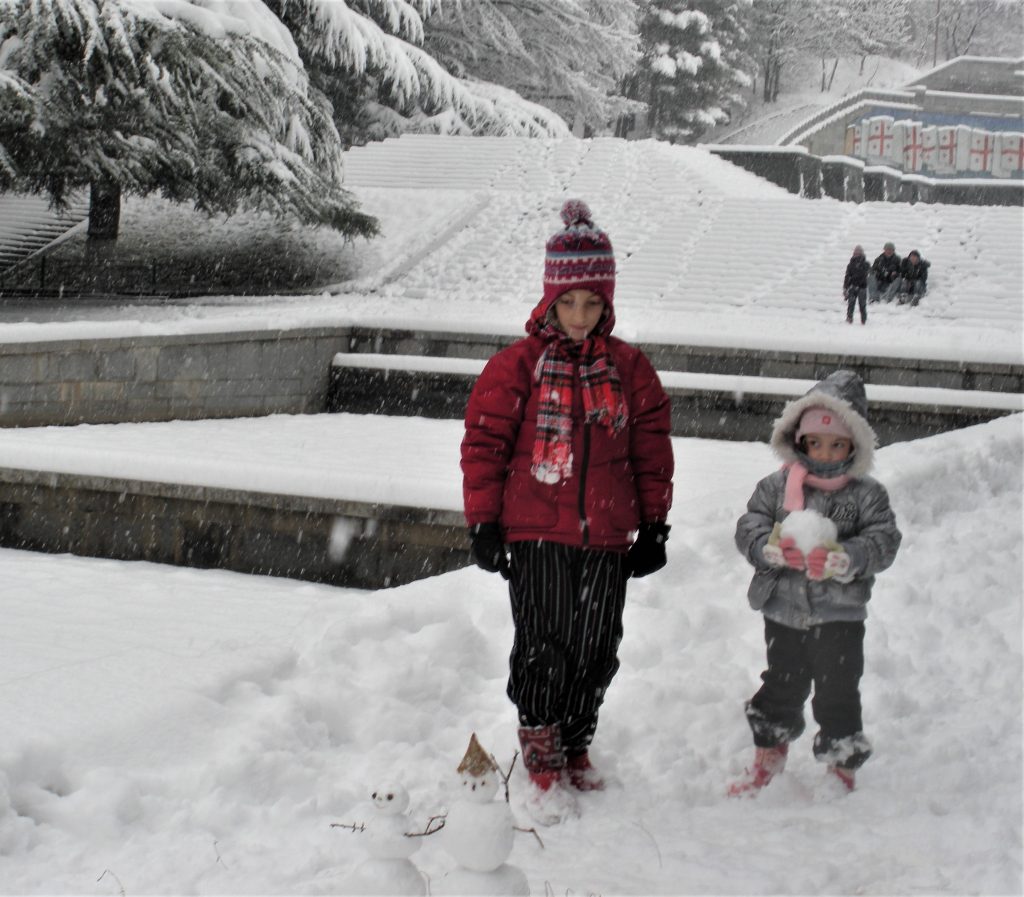
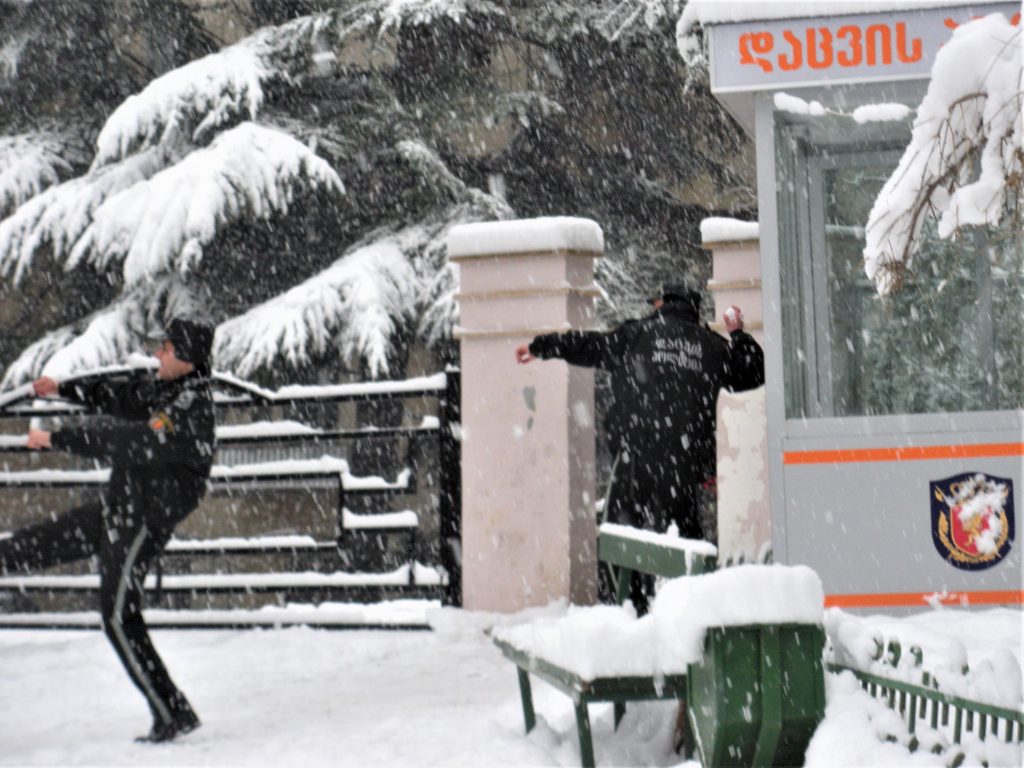
This is perhaps the fourth snowfall we’ve had since I arrived just over a month ago; most have dusted the rooftops and parked cars but left the pavements merely wet. Each time, Georgian friends tell us how unusual it is—Irina says the last snow she remembers was when her daughter was born, 19 years ago. Stephanie tells me last December she hardly needed a coat. According to The Lonely Planet (and practically every other authoritative source of general information about Georgia), it rarely snows in Tbilisi; the average temperature for January is 45 degrees Fahrenheit.
Still outside my kitchen windows the snow falls steadily, purposefully, as if to prove a point: never, never underestimate Tbilisi’s capacity to amaze and confound, to astonish and perplex, puzzle and delight.
As I settle deeper into life here I find the experiences accumulating faster than I can write about them. Stopping to reflect and record and share, to download photos and daily events, is to turn away from being here fully and presently. But before I left DC a friend urged me to keep notes, and I believe there may be some value in taking time to chronicle what is novel in these early days, before it all becomes commonplace. I go about quotidian tasks and errands in a near-constant state of wonder, even while I step around dog shit on the broken sidewalks and dodge reckless drivers to cross the streets, which are almost entirely without traffic signals and pedestrian crosswalks. All my senses are heightened, and the hours are full, textured with unexpected dimensions. A day that might accurately be described in a short list (“coffee with Steph, start beans, poster to framer”) might also be described this way:
“On a recent Wednesday, I had a morning coffee date with an American woman I’d met through the International Women’s Association (IWA). I attended a monthly general meeting of IWA my second week here and became a member on the spot. Stephanie’s energy and openness caught my attention, and we are becoming friends even though she and her family are on their way back to Minnesota in a few weeks. Steph is generous with her time and the experience of two years in Tbilisi, and I will miss our conversations.
On my way home from the café, I bought a bunch of cilantro and some fresh chilies at a fruit and vegetable stand. These are everywhere in the neighborhood, sometimes more than one per block. Some are storefronts with produce displayed out front, some are small wooden kiosks with a single window, some are rough cages of scrap lumber and wire, and some just a few crates, sacks, or iron pails on the sidewalk. Each one offers some variety of whatever’s in season: now we have yellow, red, and pink apples; mandarin oranges; two kinds of persimmons; walnuts and hazelnuts in the shell; pomegranates; green and purple cabbages; big creamy heads of cauliflower; white, yellow, and purple onions; potatoes; carrots; red and pale green sweet peppers; prickly-skinned cucumbers; and fresh chilies, flat-leaf parsley, dill, and cilantro. Some markets have imported items like cherry tomatoes, pink grapefruit, broccoli, eggplants, and fresh spinach, others stock several varieties of dried beans, popcorn, and pickled vegetables–tomatoes, cabbage, cucumbers, and peppers. The fresh produce here has extraordinary flavor and is very inexpensive for us.
Back at home, I put up a pot of red beans for dinner, checked e-mail, and headed back out around 2:00 o’clock carrying a poster I wanted to have framed for Jim’s office. On the way up Chavchavadze Avenue I bought an enormous, shiny pomegranate for one lari (about 75 cents) from a smiling woman with two tall burlap bags of fruit. I continued walking, past Philharmonic Hall and the traffic circle where Chavchavadze briefly becomes Kosova Street, and then through an arcade fragrant with doughnuts, fried in hot oil and dusted with sugar while you wait, and freshly popped corn. Women dressed in black sit on small wooden stools selling bundles of tiny beeswax candles for the faithful, who carry them at all times so they can stop in any church to kindle the light of prayer. Out the far side of the arcade, Kosova Street becomes Rustaveli Avenue and the sidewalk widens to a square in front of the metro station. Here a statue of Georgia’s most famous and beloved poet, Shota Rustaveli, towers above a fountain with five lions’ heads, water flowing from their mouths. Crossing a wide street that climbs one of Tbilisi’s surrounding hills, I arrived at the marketplace that occupies the steps of the former Georgian Academy of Sciences, where I’d noticed picture frames on display.
I approached a picture frame vendor, unfurling my poster. He began to speak to me in Georgian and when I replied in English, he whistled for an English-speaking colleague who helped me to choose a frame and negotiate a price of 40 lari, or about 25 dollars. I could return in 30 minutes, they said, to pick up the framed poster. It’s said that comparisons are odious, but I could not help marveling at the differences between this transaction and the one that would have taken place in DC, where the price would have been at least 200 dollars for a poster 24 by 36 inches and the wait time at least a week. I gave the vendor 15 lari on deposit and then I simply had to occupy myself for a half-hour and return with the rest of the cash.
After collecting the skillfully framed poster and delivering it by taxi to Jim’s office, I walked home amid headlights and streetlights and horns blaring and dogs barking and Tbilisi alive all around me.”