Ananauri
Now that the weather turns toward spring and our truck is repaired (with genuine Ford parts, purchased online and delivered through the efforts of USA2Georgia) we have begun taking Sunday drives to nearby sites of historical interest. Recently we chose as our destination Ananauri, just 66 kilometers from Tbilisi. Ananauri… a decidedly un-Georgian sounding name, with just three consonants, each standing alone and scattered among five vowels! We think this must be an extraordinary place to have such an uncommon name. Our guidebook tells of amazing old churches, and we like to be amazed.
The day begins with sun but soon clouds over; the rain is scant and the roads mostly dry. It’s an easy ride along the Mtkvari River as far as Mtskheta, where we pick up the Georgian Military Highway and continue north along the Aragvi. A half-hour outside of Mtskheta the road begins to climb, leaving the river far below. Raw clefts through the hillsides look prone to rock slides, and I try not to look at them, concentrating instead on the vistas opening on my right, tree-clad ranks of mountains beyond mountains rising from the river gorge, mist lying in the valleys.
We pass a stone monument bristling with symbols of battle; then the road climbs more steeply, winding along the western edge of the Zhinvari Reservoir. The water is very low; inside the broad dam a motor boat hangs suspended in midair, waiting for rushing snowmelt from the peaks at Gudauri and Kazbegi to lift it free. A round tower appears on the right, set back from the road, and we swing into a big, open parking area. Two friendly and very dusty dogs greet us hopefully, but we carry nothing but a camera; the dogs turn and wander off.

A few tables of handcrafts stand between us and the entrance to the site; we exchange greetings with the vendors, smile and glance briefly at dolls in traditional dress; fur hats; hand-knit socks, mittens, vests, and hats; jewelry.
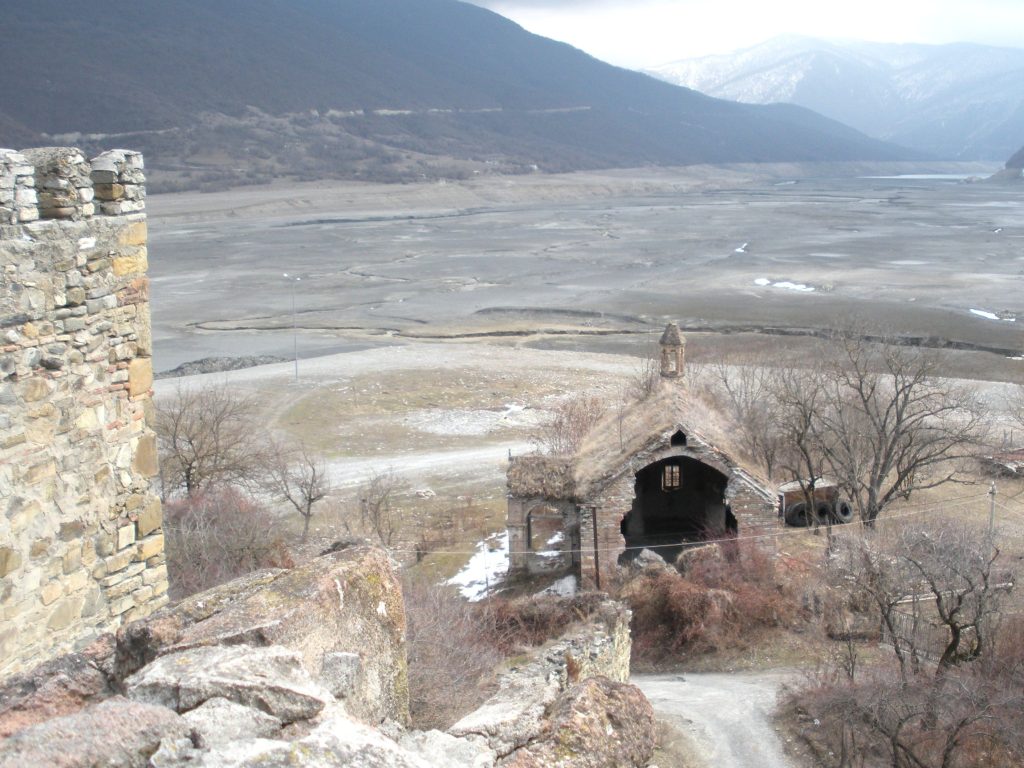
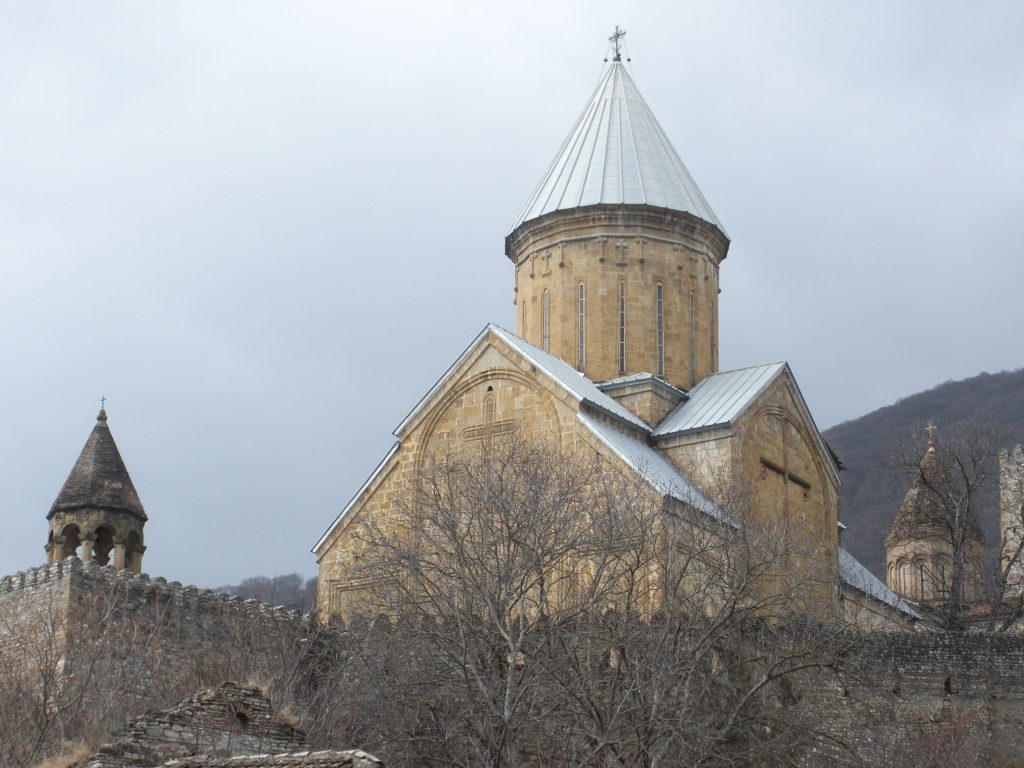
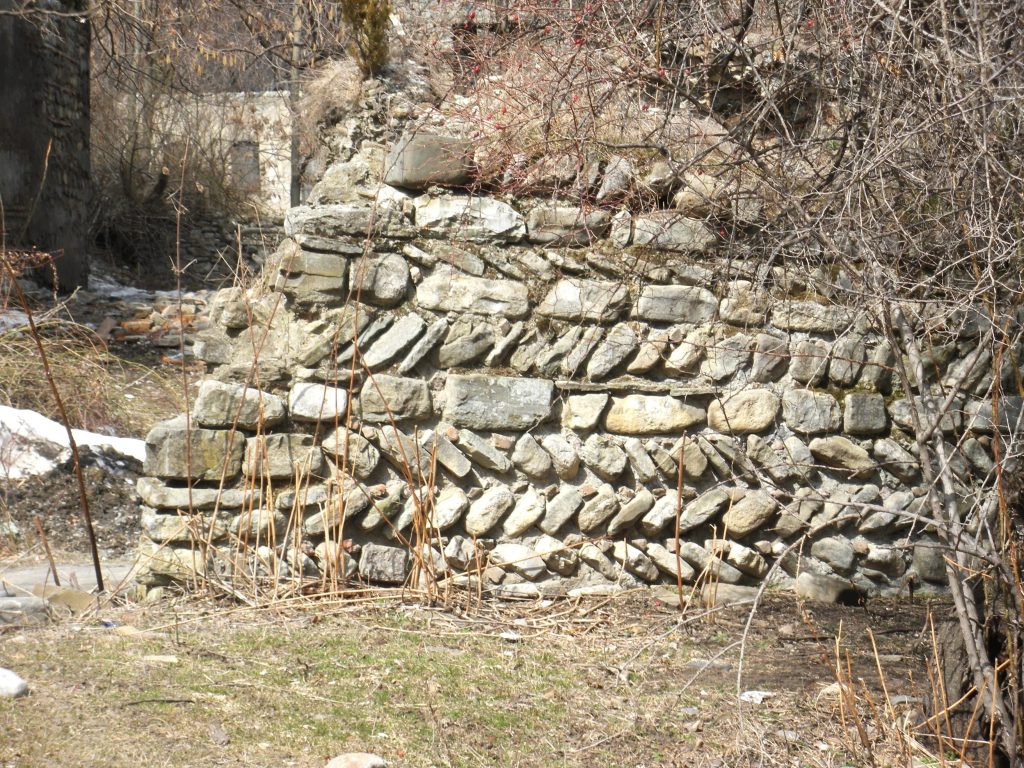
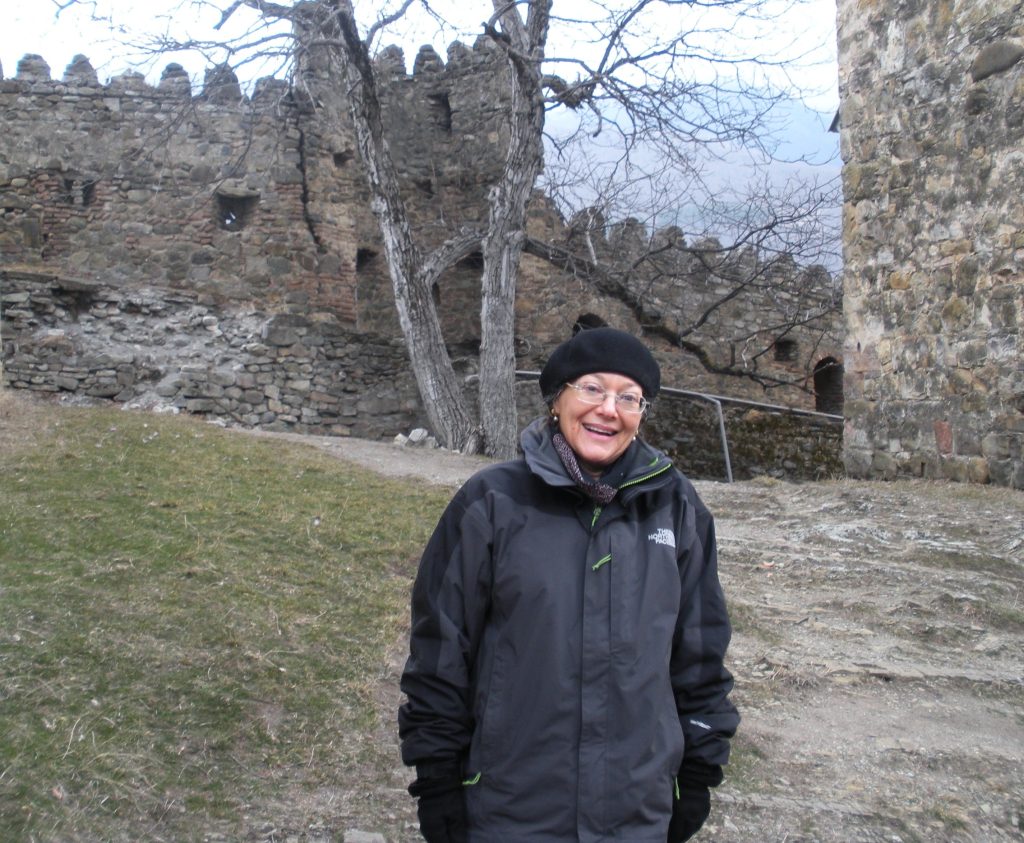
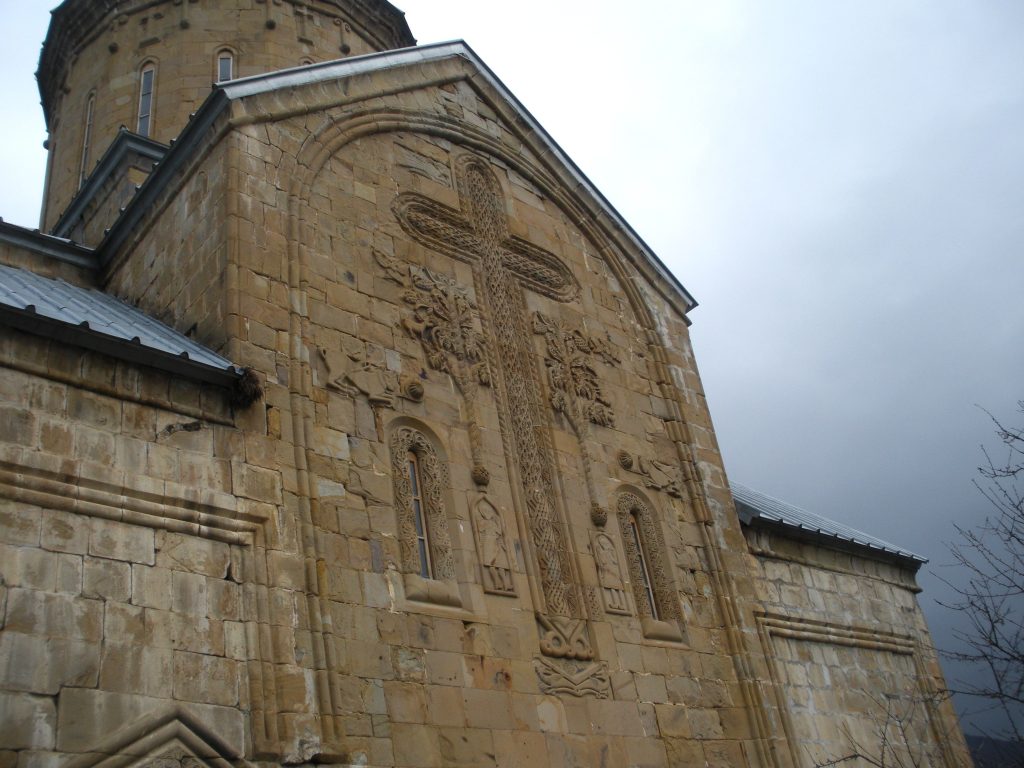
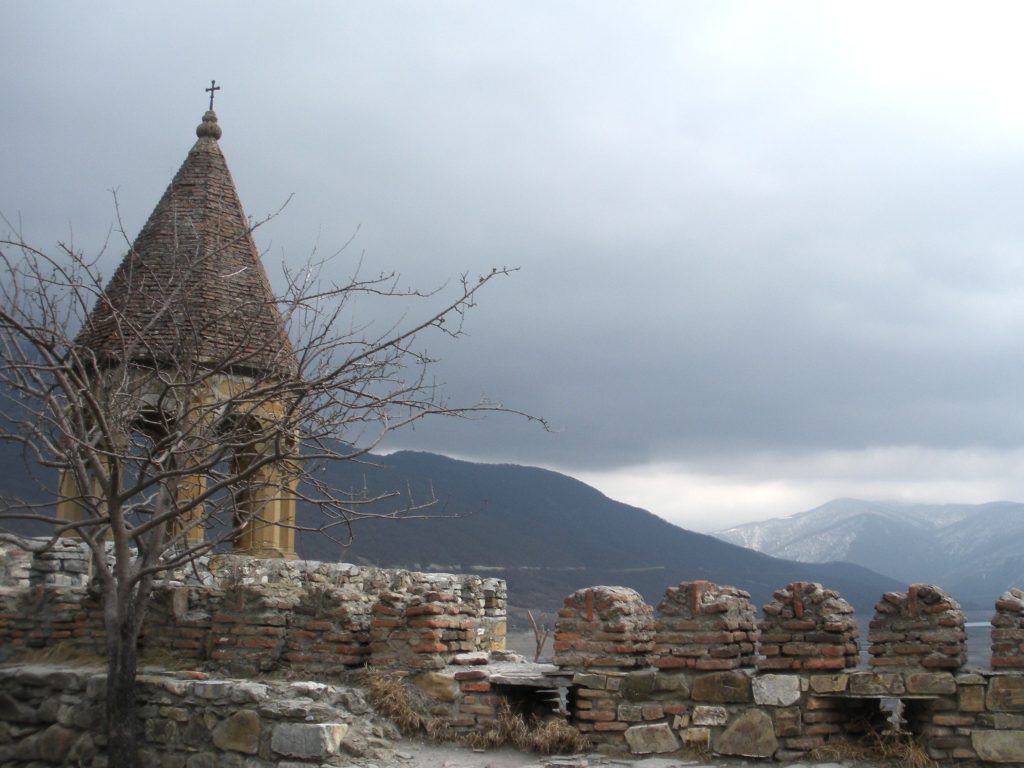
The two churches at Ananauri are enclosed within dark stone walls, crenellated along the summit and with watchtowers set at intervals. We enter the compound through the square main gate, a squat tower in the south wall. The lower church (late 17th-century) of warm yellow sandstone stands just inside, so close to the wall that it’s impossible to photograph straight on, and we crane our necks to admire the tall façade. The carvings resemble Celtic designs, curving, intertwined knots and intricate braids. We walk along the south side of the church to the east end and look over the fortress wall to the reservoir below; here it is entirely empty, a wide dry wash of gravel and mud with islands of debris. The turret of a round belltower just outside the wall is almost close enough to touch. Cut into the hard-packed earth between the wall and the church, a flight of stone stairs descends into darkness and silence; possibly a passage to a hiding place below, or the way to refuge within the fortified walls from enemies outside.
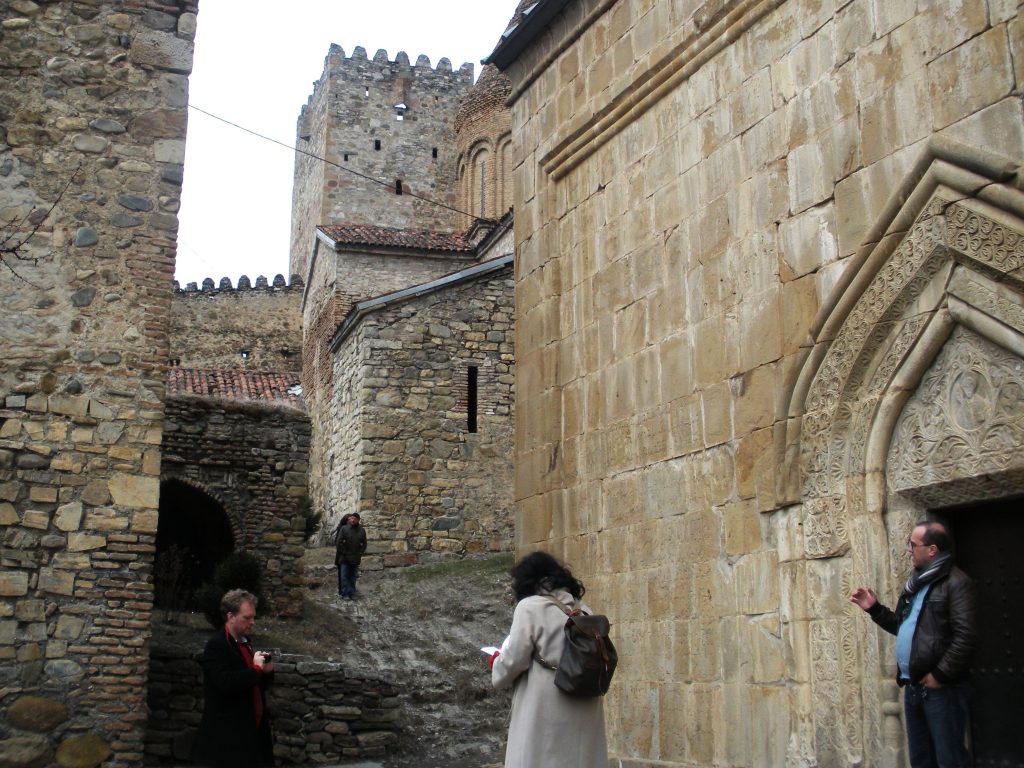
We turn back toward the church and enter through a small door in the south façade. A service is in progress; a small congregation draws close to two priests in the center of the nave, frankincense perfumes the air, sweet voices in harmony punctuate the low drone of the liturgy. We stand at the rear with a few other tourists, taking in the soft light filtering through high windows, the massive vaults and pillars, faded frescoes, gilded icons in frames with beeswax tapers burning before them. I wonder how much the worshipers and their priests resent our presence, and I stand very still, trying to radiate respect and humility. Soon we leave quietly and return to our explorations.
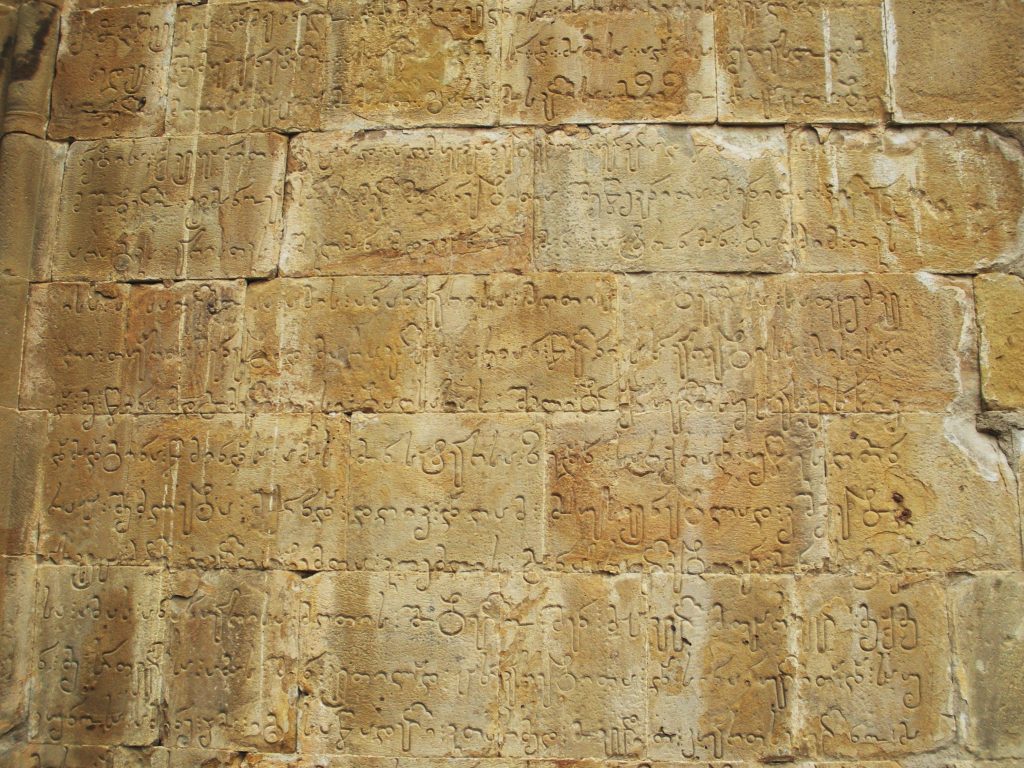
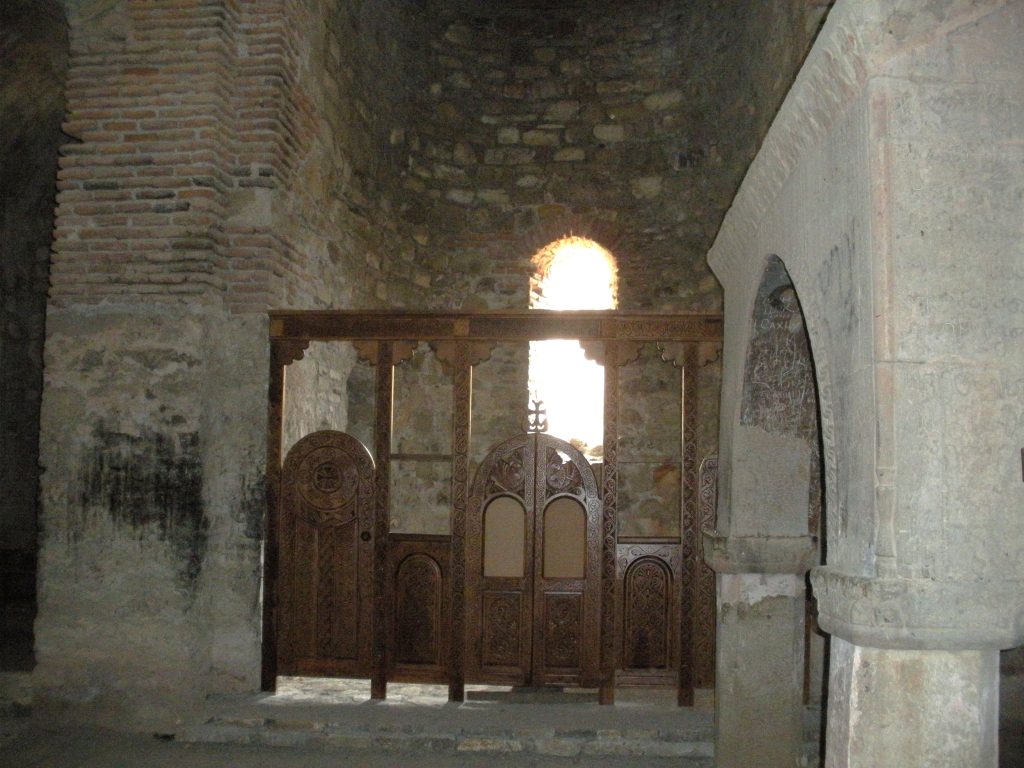
Passing by the main gate, we climb a little rise and find the upper church (early 17th-century), no longer in use. The doors are gone and the porch stands open, its floor of fitted stones an unfinished puzzle as if someone is still working at it. We pass through a low doorway and into the church proper, where an arched stone portal just inside is engraved both front and back with graceful Georgian script. Beyond this is a small, square sanctuary with high vaults rising to the domed crossing; pale light enters through the apse window and piercings in the dome. The iconostasis is still in place, but all the icons have been removed and only the wooden framing remains. A profound stillness reigns here, and cold seeps from the uneven floor.
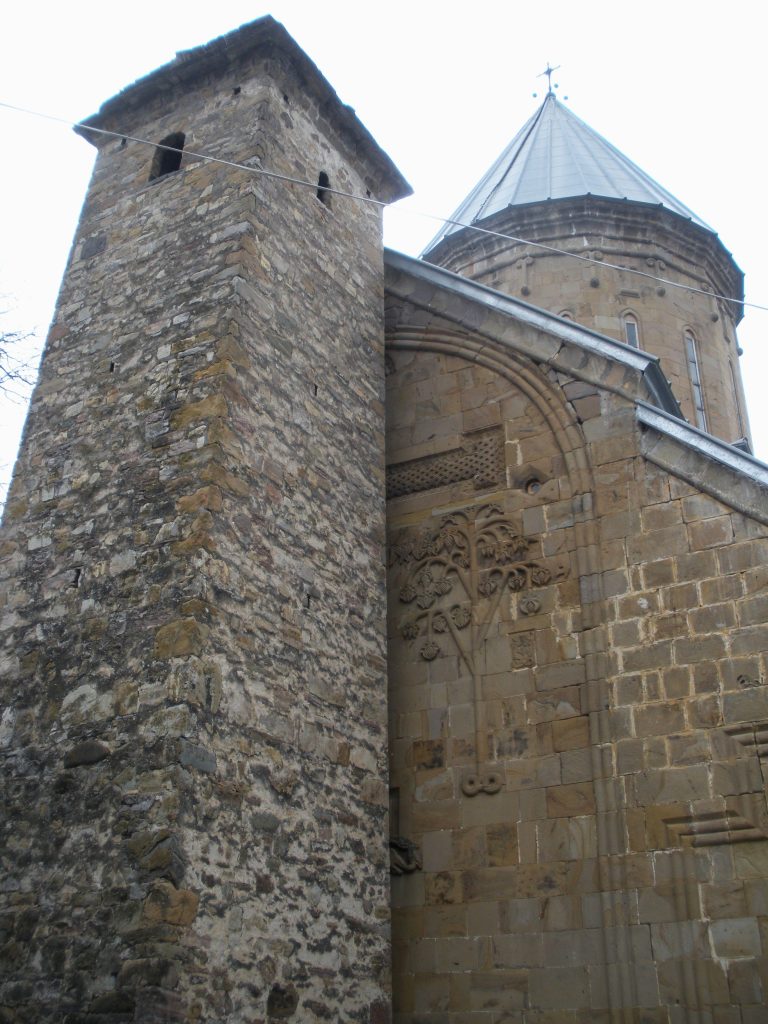
Turning again to the outdoors, we continue north along a pathway that parallels the western fortification wall. Snow remains in sheltered corners, and the way along the north wall is dammed with dirty ice. Retracing our steps, we puzzle over a 12th-century stone tower standing close beside the western façade of the upper church—so close that relief carvings on the church are nearly hidden from view.
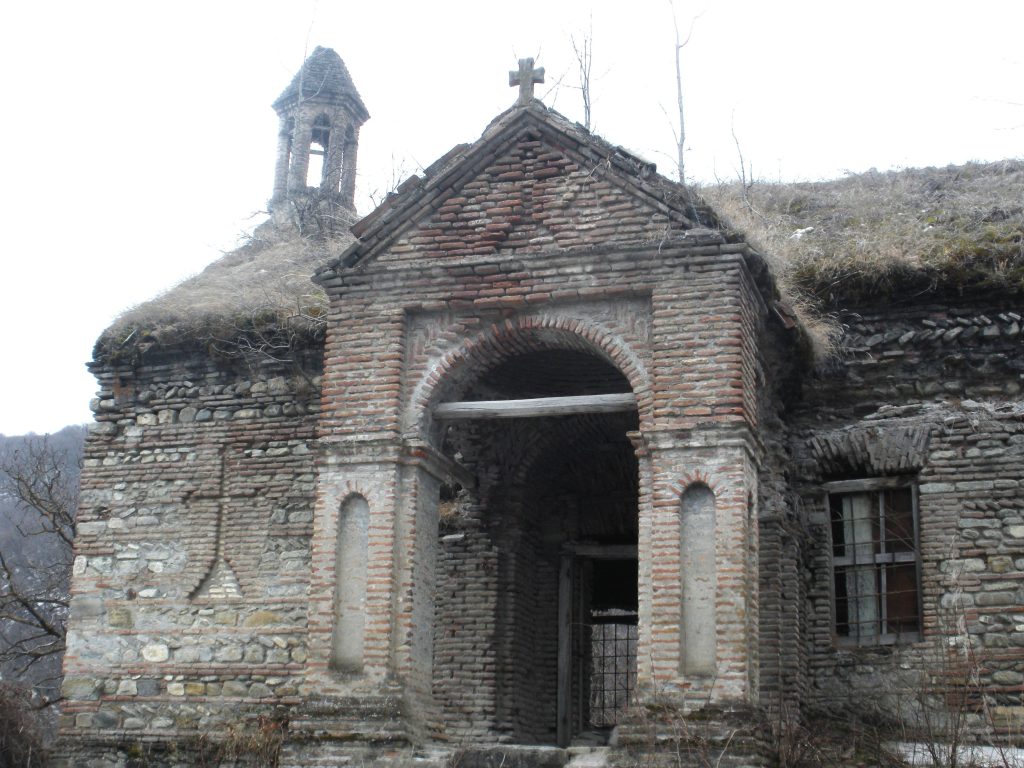
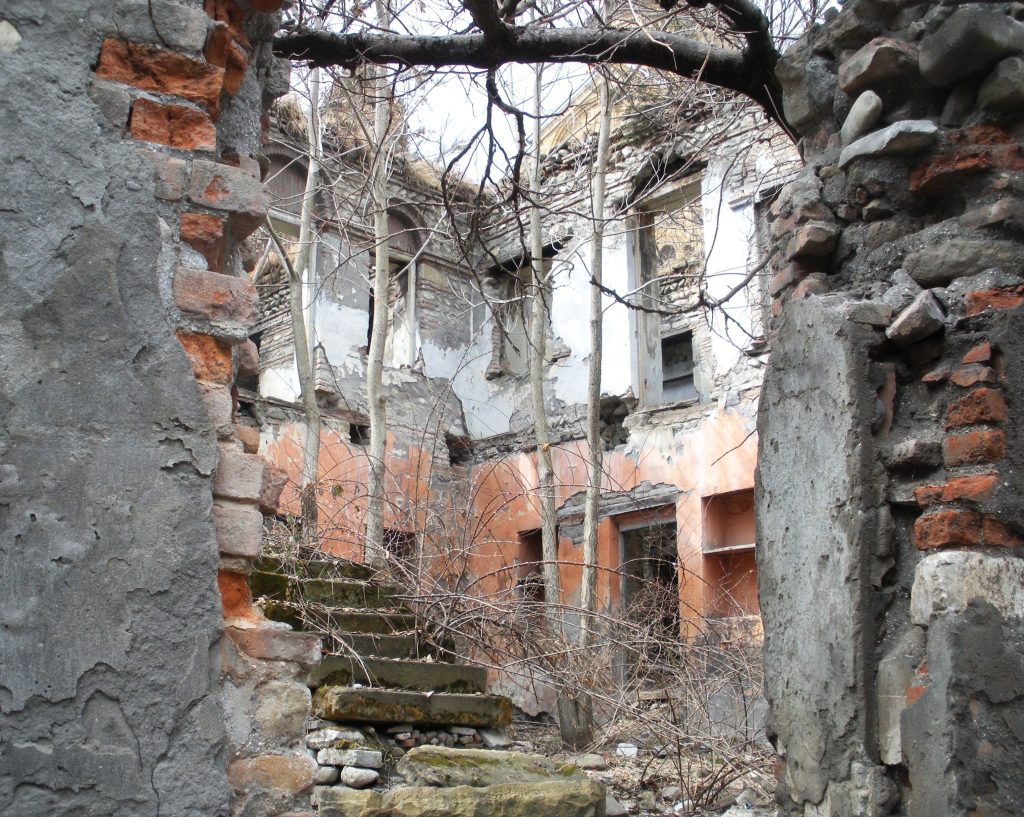
We exit through the main gate and walk down toward the empty reservoir. Along the shore stand ruins of the old village of Ananauri, its inhabitants removed to higher ground before the town was inundated. We wander through the ghostly remains, imagination restoring the gaping roofs and torn walls and populating the broken church. We try to picture the place in summer, with lakefront cafes and restaurants, and boats to rent by the hour. We prefer the old stone fences to the new concrete quayside, but that’s just us.
On our way out, we stop and buy a pair of small handmade dolls in traditional costume and a hand-knit vest of soft Georgian wool. The dogs walk with us back to our car and we drive away, properly amazed.