Historic Synagogue, Mondovi
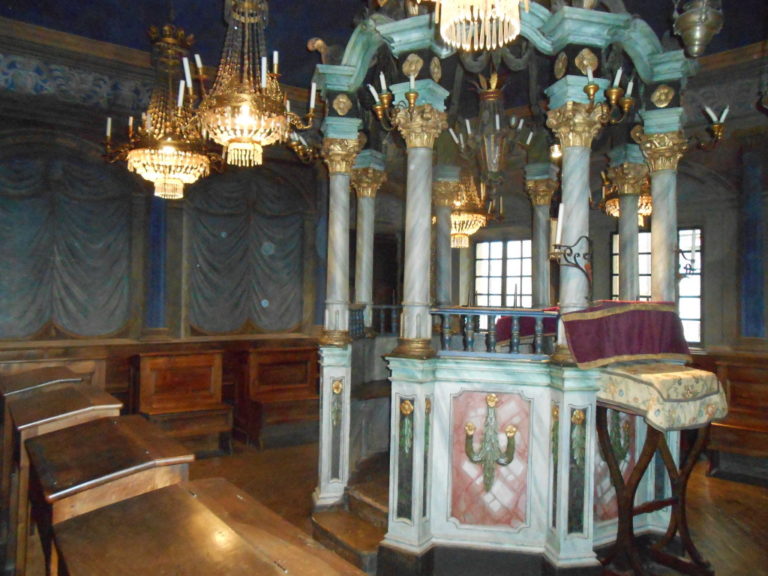
Sunday, 29 September 2013 was designated “la giornata europea della cultura ebraica,” or European Day of Jewish Culture. On this special occasion, in Italian towns and cities from Asti to Venezia, Jewish historic and cultural sites are open to the public. This includes the historic synagogue at via Vico 65, a few doors down from our first apartment in Mondovi. For a full year we lived just steps away from this treasure, which is normally open by appointment only, but just today we spent 30 minutes touring the sanctuary, women’s gallery, and children’s classroom. I’m sending some photos to share (see attached file below my signature), and will give just a few points of information from our tour. (Thanks to my friend and former Hillel colleague, JB, for the following link with a fuller history of the synagogue: http://synagogueartresearch.wordpress.com/countries/italy/mondovi/
The synagogue occupies the third (top) floor of a small apartment building, and we were asked to keep silent on the stairs out of respect for the residents. As you can see from a photo of the floor plan, the sanctuary is irregularly shaped, with the door at the rear, the pulpit in the center, and the ark at the far side of the room. Markings on the pulpit indicate it may have been re-assembled after moving from a previous location. Simple wooden benches run along three walls, which are painted with trompe l’oile blue draperies. The carved and gilded wooden doors of the ark are curtained with heavy silk, thought to be original 18th-century furnishing. The rest of the synagogue comprises a women’s gallery, completely separate from the sanctuary, a small classroom for children, and a balcony, now enclosed, with views to a green valley below the city ramparts.
The Mondovi ghetto of the mid-18th century consisted of a few houses and a common courtyard, perhaps from number 65 to number 59 via Vico. During the 19th century, as many as 150-200 people lived in this tiny enclave. By law, no identifying sign or symbol could show passersby that behind the houses a small Jewish community existed, seeking to live in peace and relative safety.