19 March 2020
Numbers of new virus patients are rising; the numbers of dead in Italy are staggering and continue to mount here and elsewhere. I think about Europe and the Black Death. I know the virus is not the plague, but the news is literally dreadful.
Borders are closing; it’s hard even to keep up with the bulletins from France, Spain, Germany, the EU. Hungary sealed itself off without warning, jamming traffic and spreading panic. The Italian government issues a new decree daily, it seems, narrowing our lives further and making us more and more uneasy. The flow of humorous video and memes on WhatsApp increases frenetically as we struggle to maintain something like calm, patience, perspective.
Last Sunday a friend told me she’s heard Air Maroc has suspended all flights to Italy. My husband’s flight home on 30 March is cancelled. It’s time to look for an alternative.
My husband wants so very much to finish his work in Sierra Leone, the culmination of three years of excruciating toil and hard-won, incremental progress. He thinks perhaps he might be able to hang on, bring things to a rational and orderly conclusion or at least the African facsimile of one. But his employer is searching for air tickets and says if he doesn’t leave now he will have to ride out this pandemic in place. She encourages him to pack his bags, get out while he still can.
In the end it’s not an exit but an escape. He packs two small bags on Monday night and goes to the office Tuesday morning as usual. We speak via Skype, he tells me the wheels are turning, he’s received his itinerary and must leave quickly to catch the ferry to the airport. He’ll leave one suitcase behind. He will fly from Freetown to Brussels, with the obligatory layover in Conakry, then to Geneva. From Geneva he will come the rest of the way by train, first to Milano, then Torino, finally to Mondovi`. He says he’ll be in touch by text or phone when he reaches Europe.
Wednesday at 6 am I’m worried; it’s been almost 24 hours since we spoke. He replies immediately to my text—he’s just arrived Paris (Paris??), has an hour before his flight to Geneva. And so it goes for the next 24 hours. We text, we even speak by phone a couple of times. He sounds pretty relaxed and upbeat although I know he’s already exhausted. I’m online searching trains to Mondovi`. He’ll arrive Torino too late for the last one, so I look for a hotel where he can spend the night. Miraculously I have two to choose from and I book a room for the night; he can get an 8:25 on Thursday morning.
At Torino things get a bit sticky. On arrival he’s questioned closely by a carabiniere: where is he going, where has he come from. The officer warns him of quarantine but finally lets him go to the hotel. The following morning, trains are being cancelled as he watches the Departures board, but not his train. He buys a ticket and takes his seat, after another encounter with a stern but compassionate carabiniere. The 8:25 pulls out on schedule, arrives Mondovì at 9:30. I collect him from the station and we go home. It feels almost normal; we’ve done this so many times over the last three years.
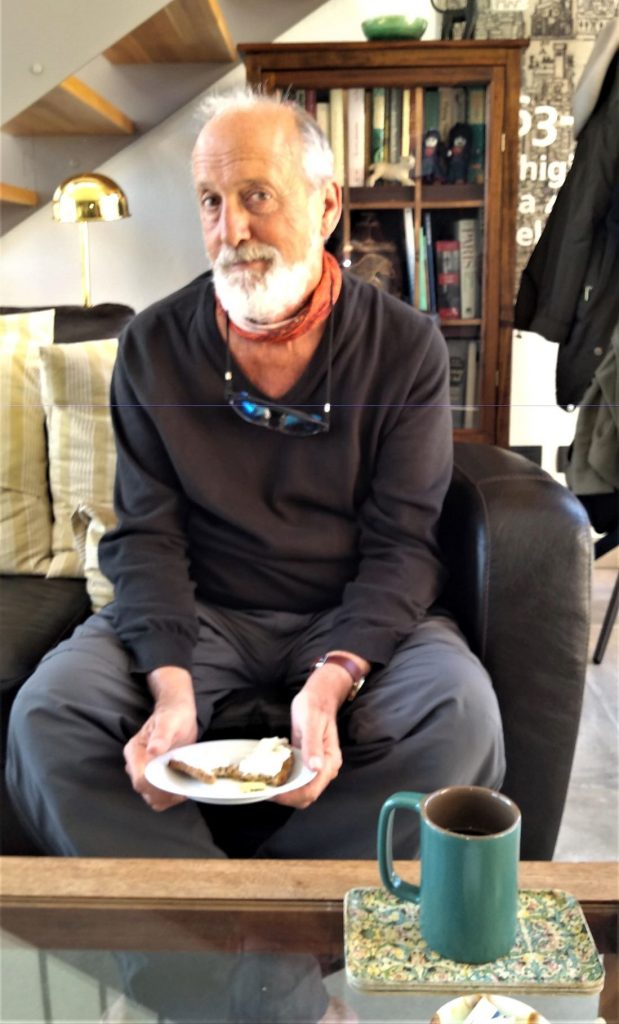
Tonight on the news we see that borders in some African nations are beginning to close as well.