Synching into Georgia
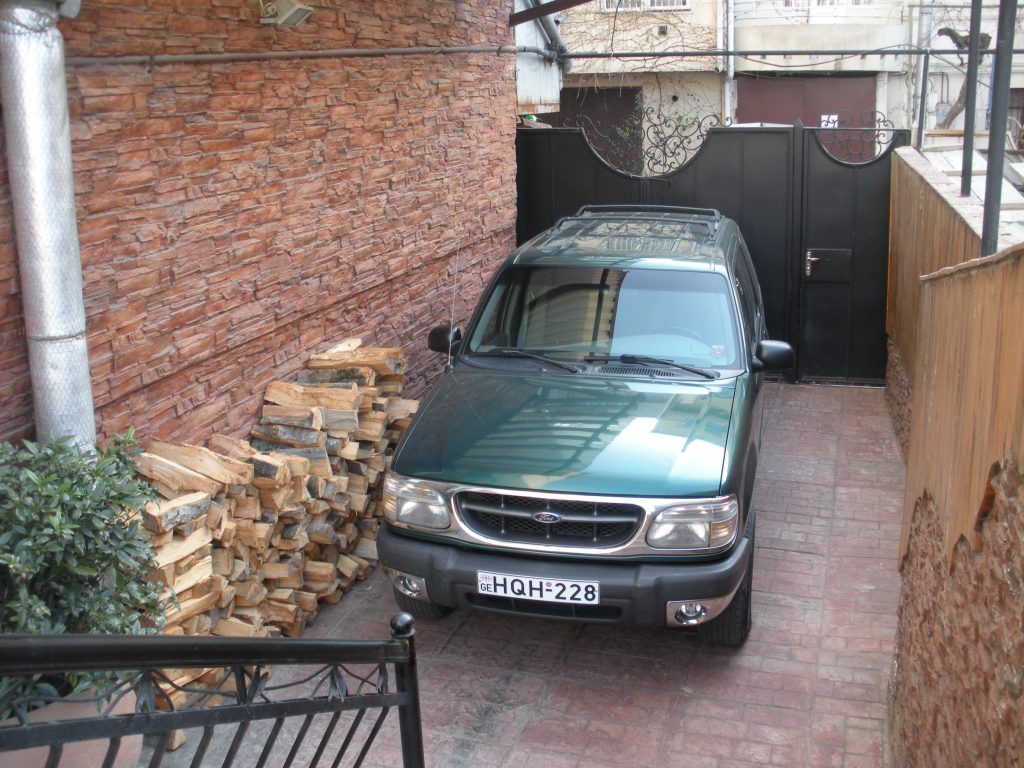
I returned home from a yoga class Tuesday morning around 11:45 to find Jim pacing the terrace outside our front door. He wasn’t locked out but was waiting for Michael, whose 1999 Ford Explorer we are buying. I was surprised to see Jim because when I had left the house at 9:15, he was expecting to meet Michael at 9:30 to finish the business part of the deal—a brief visit to a notary bureau and then a quick trip to the office of automobile registration–and we would be the Ford’s legal owners. Former Soviet states are reputed to excel at bureaucratic efficiency, so Jim expected to finish and be at work in his office by noon. But notary bureaus are private enterprises; some post business hours beginning at 10:00, some at 11:00, and apparently even those are subject to change without notice. In the end everything worked out (by 3:12 PM a big green Ford sat parked just inside our front gate) and the actual registration process took about twenty minutes (compare that to your last experience with any Department of Motor Vehicles in the States!), but synching our Western expectations about time to Georgian realities is a continuing learning experience that requires some patience.
Another example is the yoga class I took that morning, which was a minor victory over more than my own tendency to allow a body at rest to remain so. Relying on a class schedule I picked up a couple of weeks ago, I had tried twice before to take an exercise class at the D-Star Dance Studio, a five-minute walk just down the hill from home. Both times I was stymied by schedule changes and misinformation, but finally I found success—and an updated class schedule—at the 9:30 Tuesday class, taught in Russian. After the confusion and false starts around timing, would a little thing like language keep me from exercising?
Certainly Georgia is not unique in its ways of regarding time as a more flexible dimension than we Americans are accustomed to. It seems to me concepts of time and its value must be a cultural hallmark, possibly deserving a whole sub-specialty in the field of anthropology. Mexico is stereotyped as the land of mañana, and the (pre-BlackBerry) United States used to be characterized as a nation of relentlessly driven 9-to-5ers. I remember how charming and old-world the Italian custom of riposo seemed when we first encountered it in the 1980s. Shops and schools actually closed for two or three hours at midday to allow everyone to go home for a big family meal and a little rest. Then they all went back to work from mid-afternoon until evening. It was adorable until you understood that it meant four rush hours instead of two each day, and that all the shops closed at 2:00 on Saturday afternoon, re-opening only after 2:00 on Monday afternoon. If you ran out of cigarettes on Sunday, you were out of luck, Carlito.
Of course the real difficulty lies not in Georgian concepts and customs about time, but in our reactions to our new environment. How do we cope? Are we in conflict and opposition, taking an adversarial attitude, or can we adapt, synching into Georgia? What did I do, for example, on Monday morning when I arrived 40 minutes early for the next scheduled exercise class? First I fumed a bit, but then I set out to accomplish one or two of the items on my to-do list, planning to return for the 10:00 class.
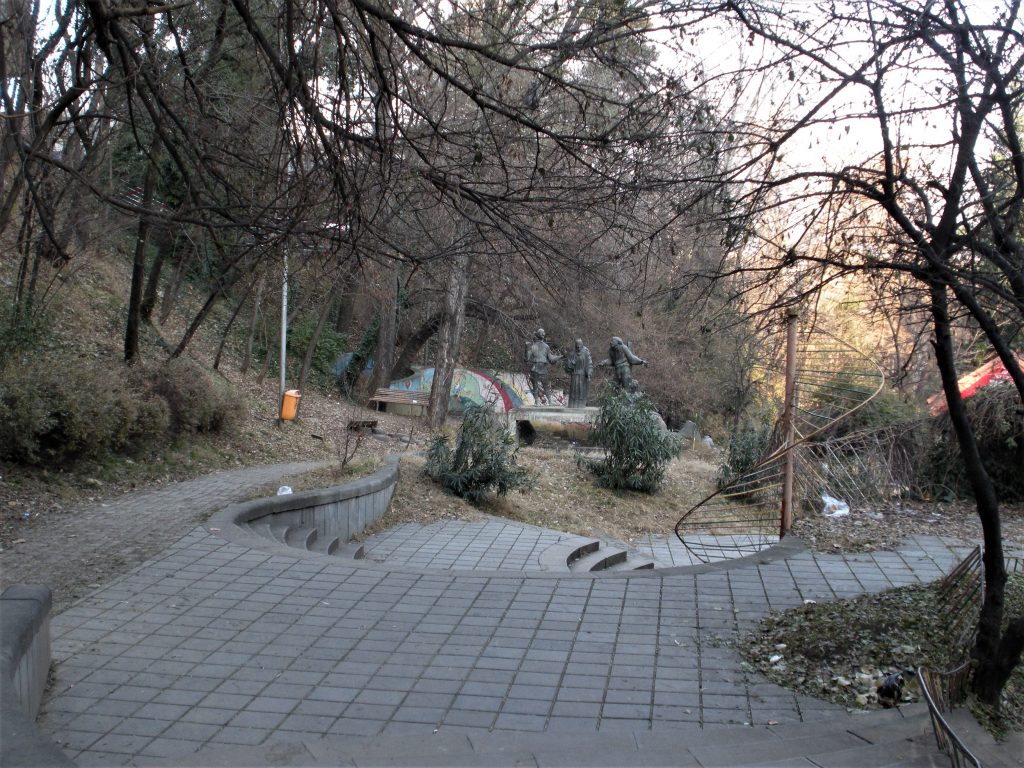
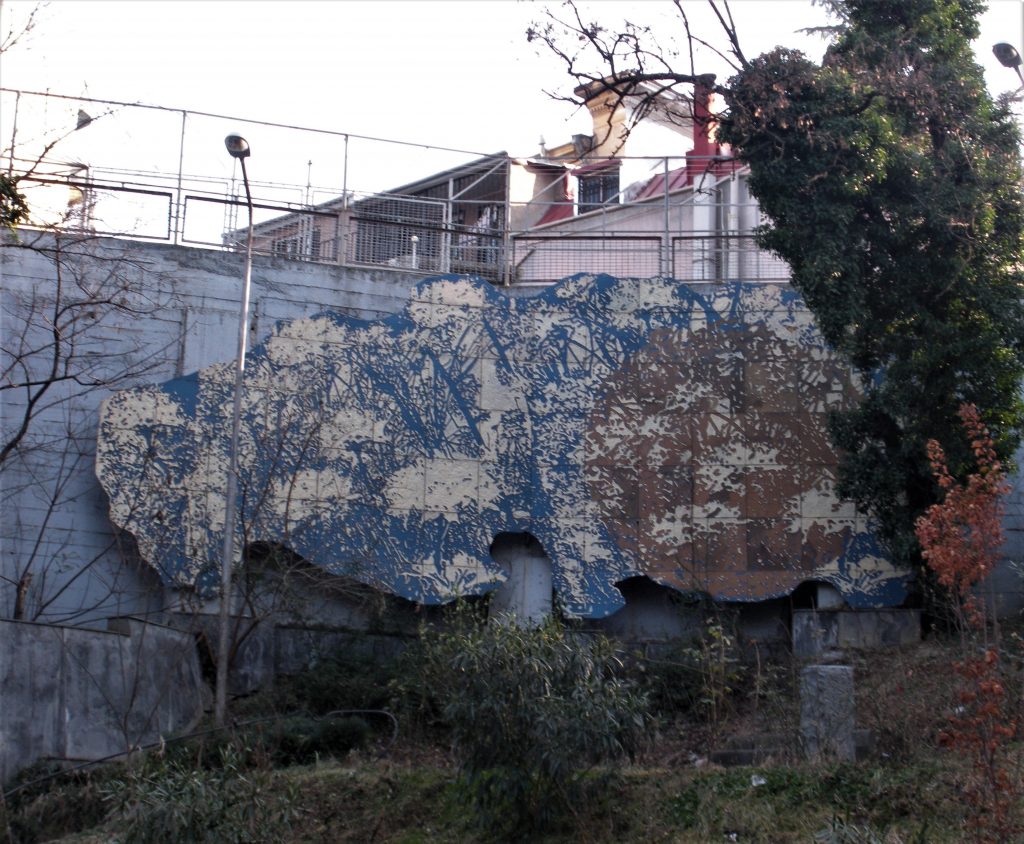
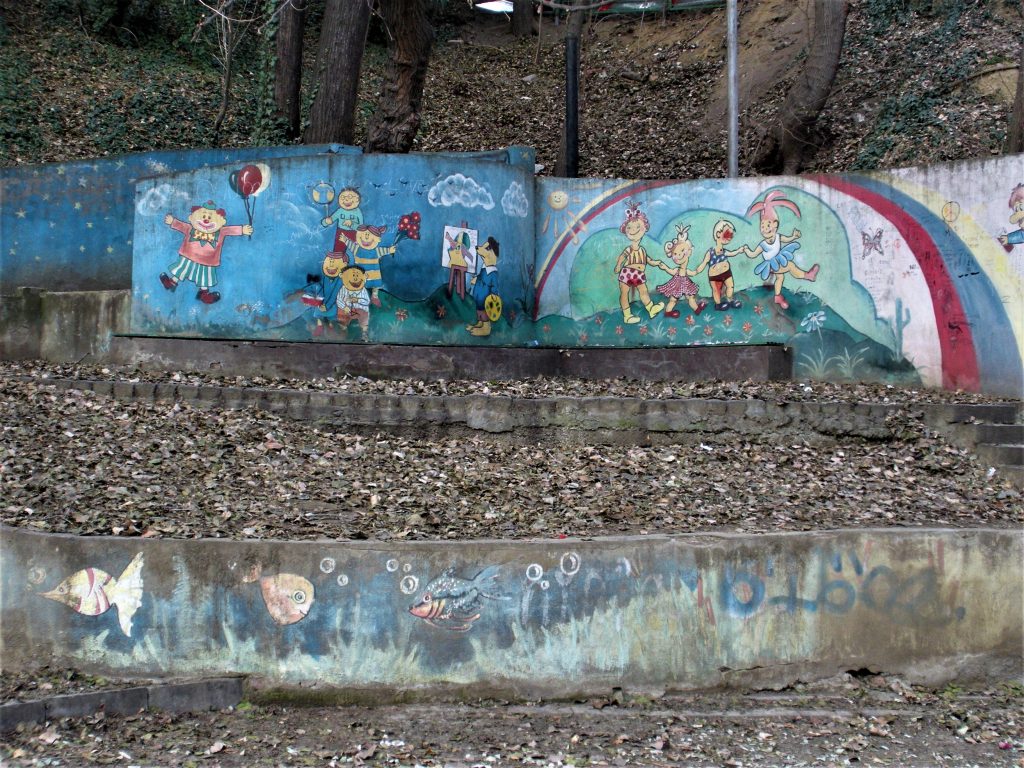
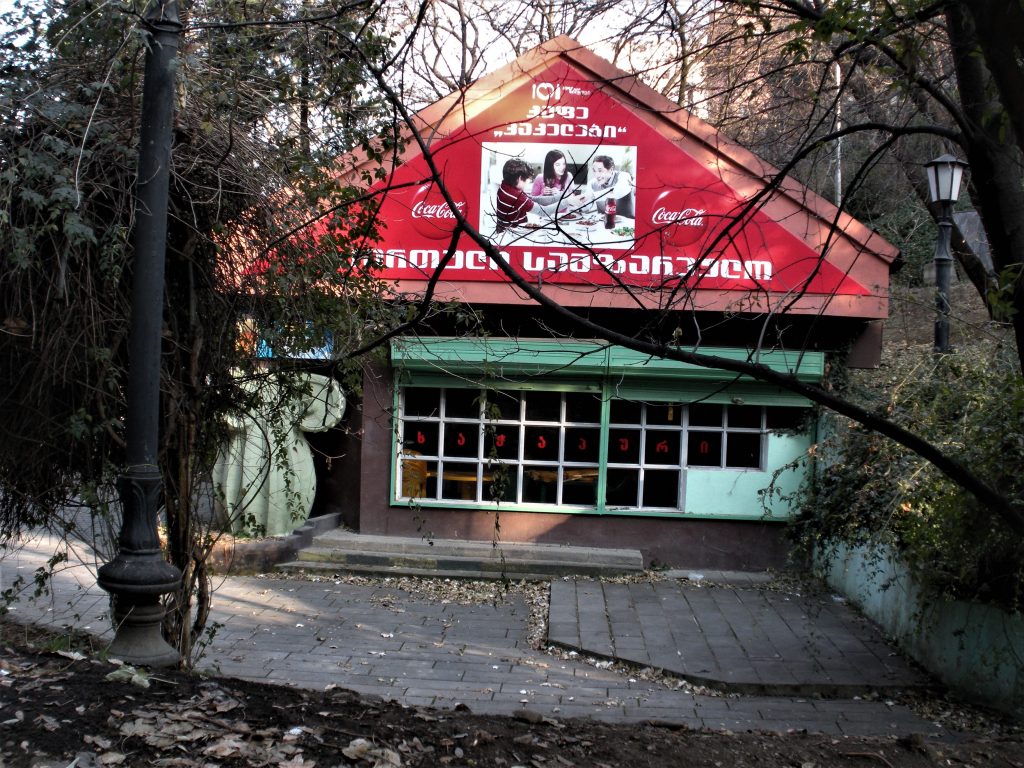
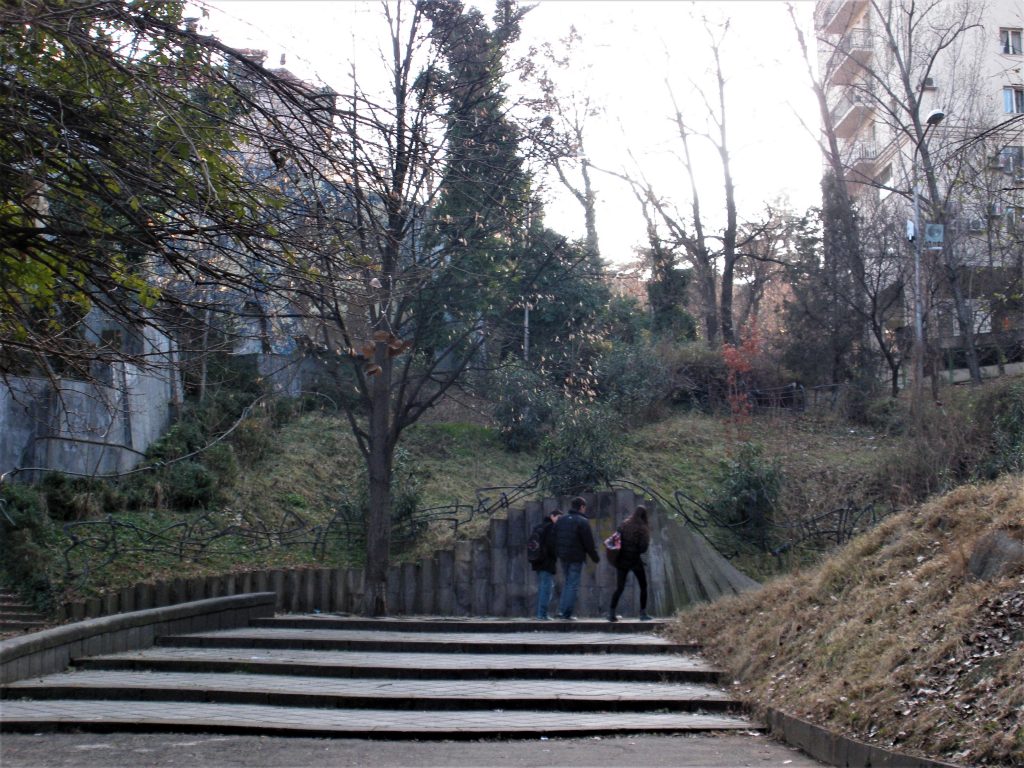
If the truism “everything takes an hour” applies in the West, how do you imagine it plays in the developing world? It is not possible to hurry through errands in Tbilisi, and it is futile even to try– but of course that’s what I did. I had to visit two little grocery shops to find the three items on my list and along the way I spied a rare and beautiful bunch of leeks at a vegetable stand, which I stopped to buy because one of the cardinal rules of life abroad is: if you see something you want, or might need at some point in the future, buy it because you may not see it again for a long time, if ever. By then I was several blocks from the dance studio and the time was 9:55—too late to get back in time for the 10:00 class. I fumed again momentarily, but without much conviction, being far too happy about the leek and potato gratin that had appeared serendipitously on the horizon of dinner. The morning was fine, sunny with a clear sky and warming up nicely, and I decided to finish my errands. A half-hour later I was passing the entrance to a park that I’ve been meaning to explore and suddenly realized the wisdom in the old cliché: there’s no time like the Present. I turned and went into the park, a typically Tbilisian alloy of once-lovely, neglected treasures, graffiti and trash. I emerged sometime later, thinking that perhaps here, where clock-time is a rough guideline rather than a ruling construct, it’s more useful just to align with the continual flow of one Present into the next and forget about the clock. Of course, I am free to allow a morning to take whatever shape it will and count it as a gift. I no longer work in the world of meetings and deadlines, measured in hours and minutes, days and weeks. Here each day presents its own opportunities to choose between fuming about thwarted expectations or synching in to Georgia.
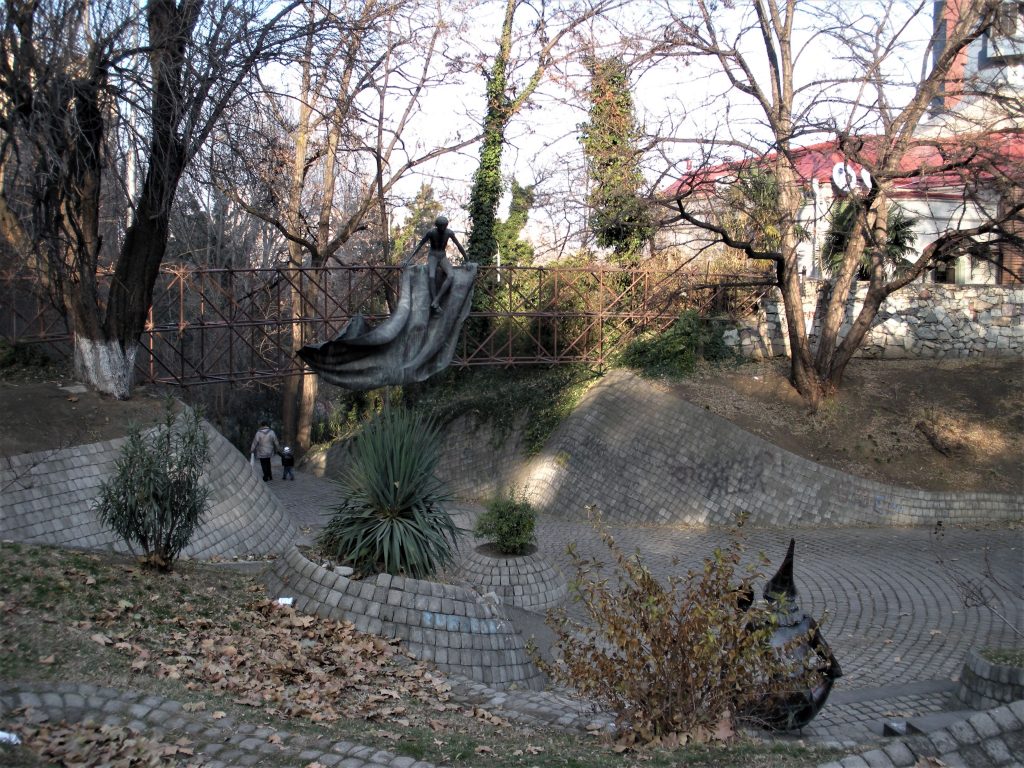
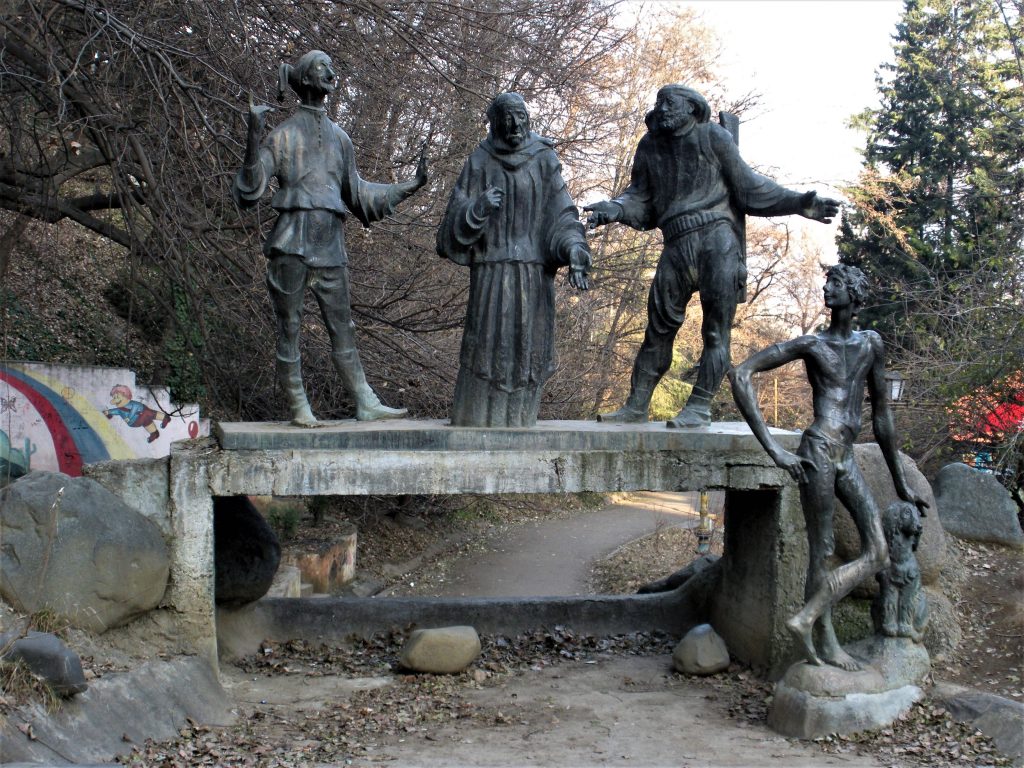

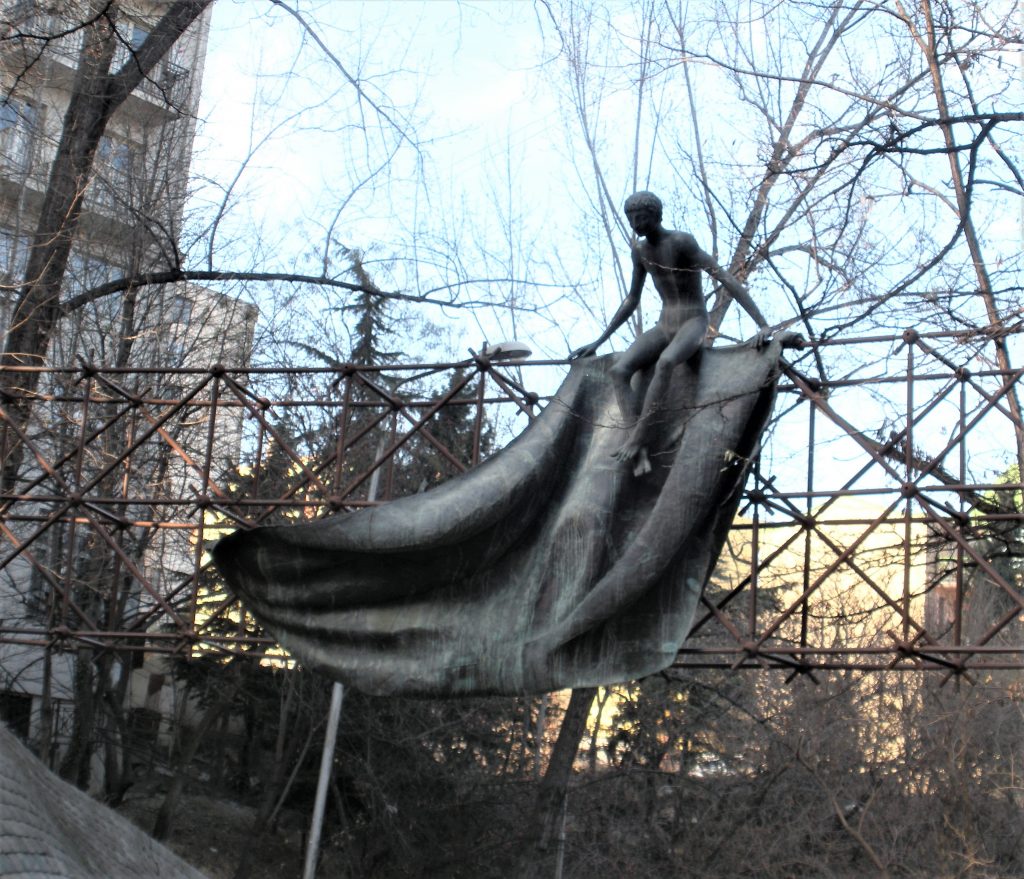
Sculpture: boy on a slide