Narakhali Fortress
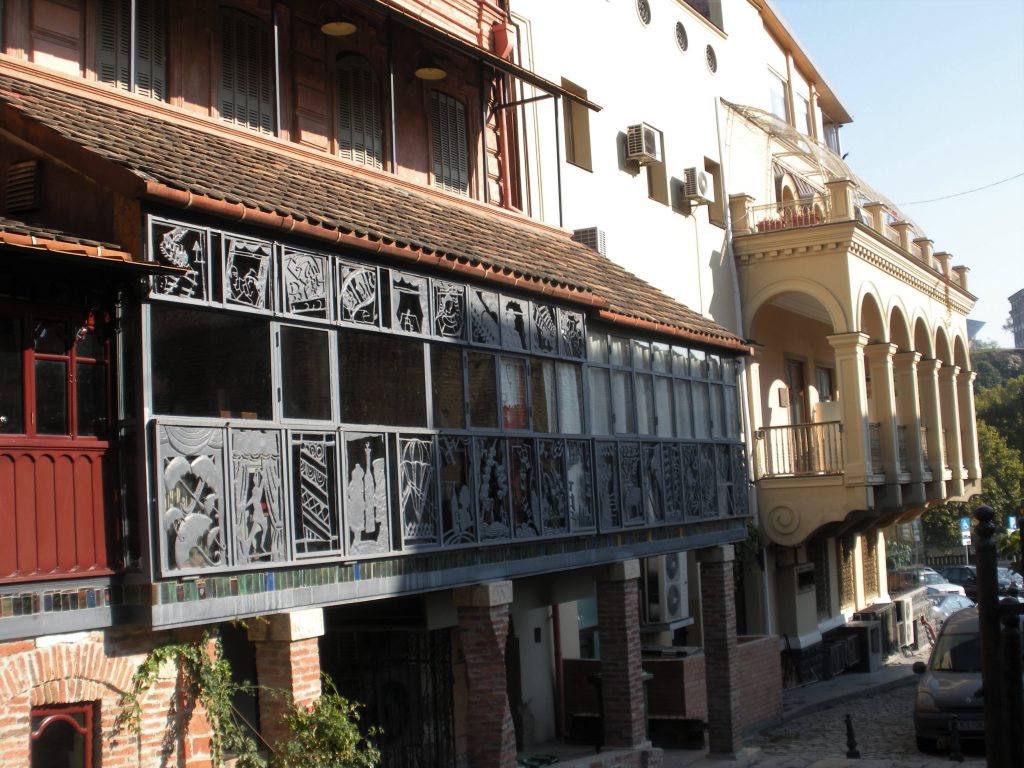
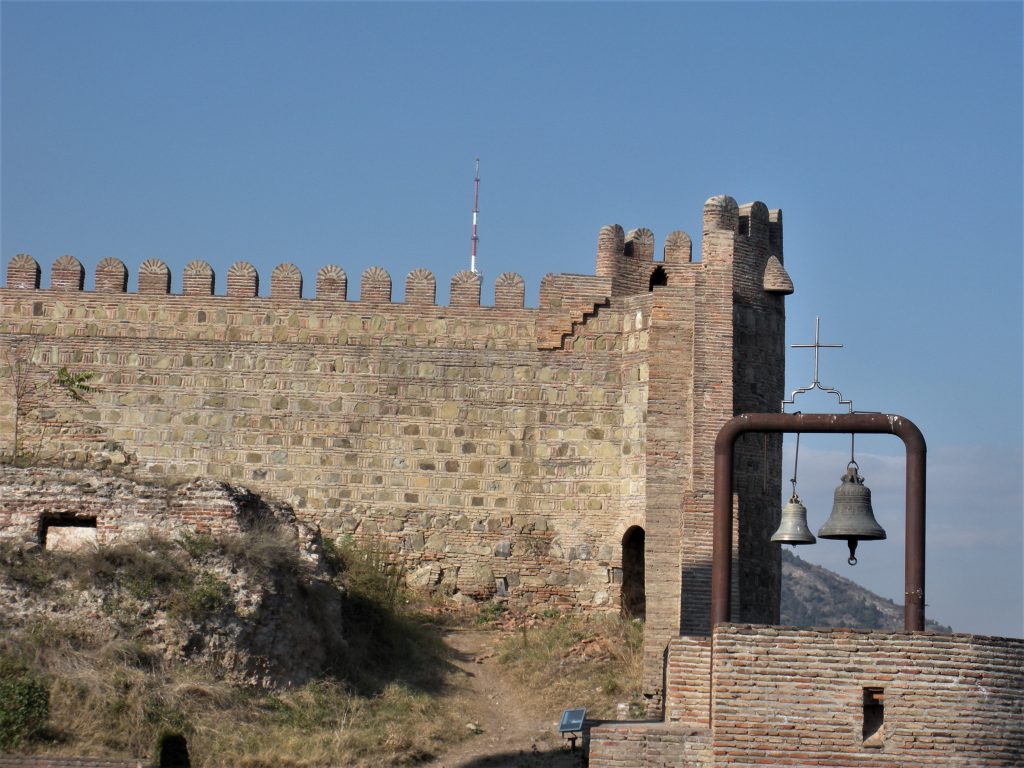
Saturday was another sunny, unseasonably warm day in Tbilisi, so we set off after breakfast to scale the western heights to the Narakhali Fortress, high above the old city. The incline must be 75 degrees, and at our age we would have been smart to take a taxi, but we have more enthusiasm than smarts when it comes to exploring new territory. So we meandered through the warren of cobbled lanes and alleys that is Old Tbilisi until the street began to climb a zigzag route toward the battlements. Sometimes we walked shallow stone stairs, alternately on one side, then the other of a cobbled street; sometimes there was nothing but a narrow sidewalk, and sometimes we picked our way among weeds and trash along the dusty shoulder of the road. A few cars passed, mostly heading down toward the town, and we encountered a young couple closely entwined; they disappeared from the path like a mirage—one moment I glanced up and saw them, and the next time I looked up they had gone.
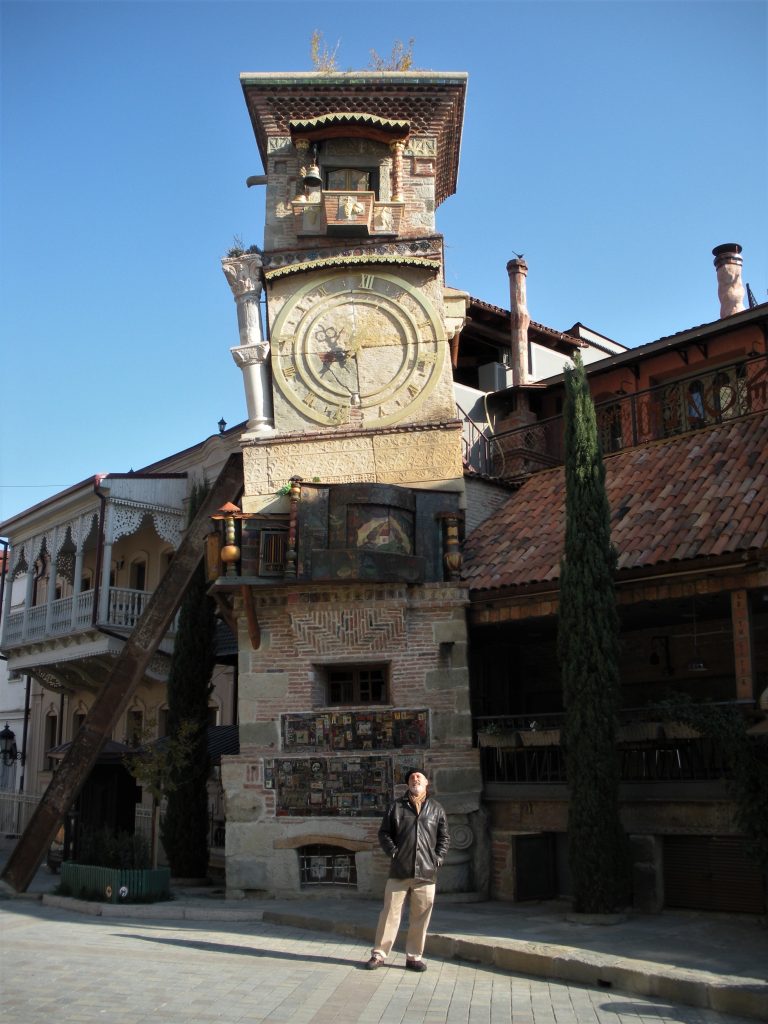
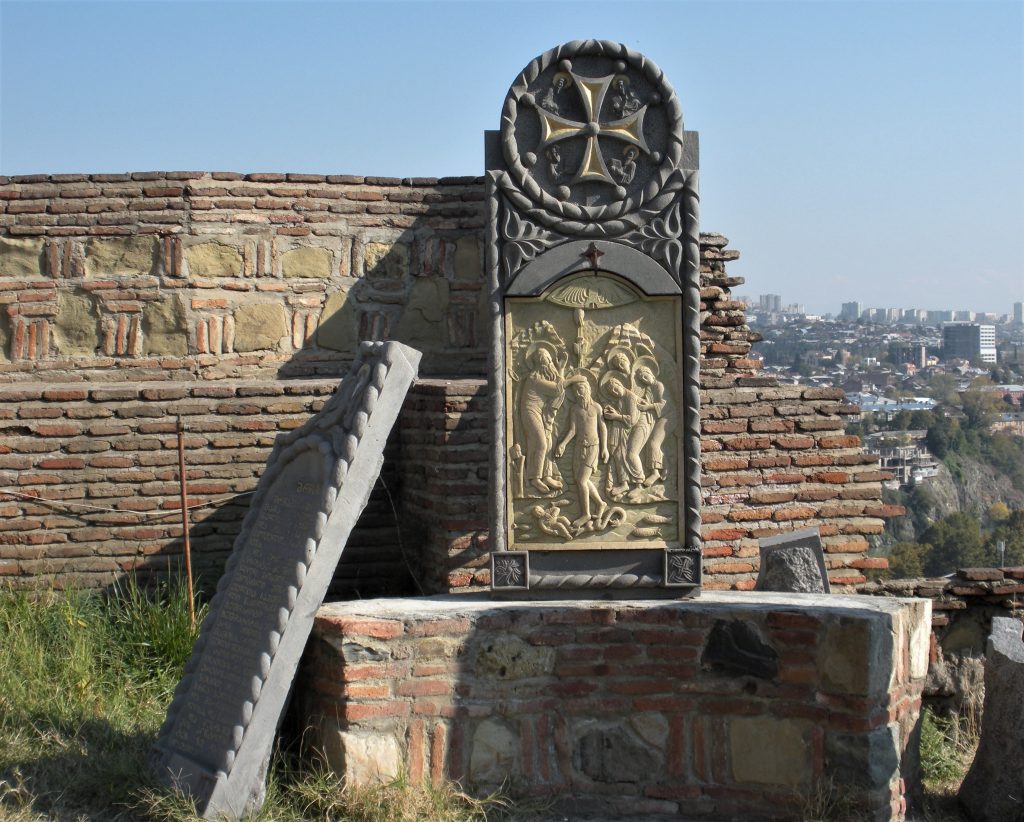
The sun was strong at mid-morning, and we loosened our scarves and sweaters when we reached a plateau below the summit. Here is a church of mellow limestone and its asphalt parking lot, and at the plateau’s rim, remnants of the lower fortress walls. These are good for climbing to overlook the panoramic scene below: from the old sulphur baths with their beehive shaped huts for soaking in hot, mineral-rich spring waters, across the Mtkvari River to the steep palisades of its Left Bank, beyond to the hills that cradle Tbilisi and then the foothills of the Caucasus Mountains, a few of the highest peaks showing white against the clear morning sky.
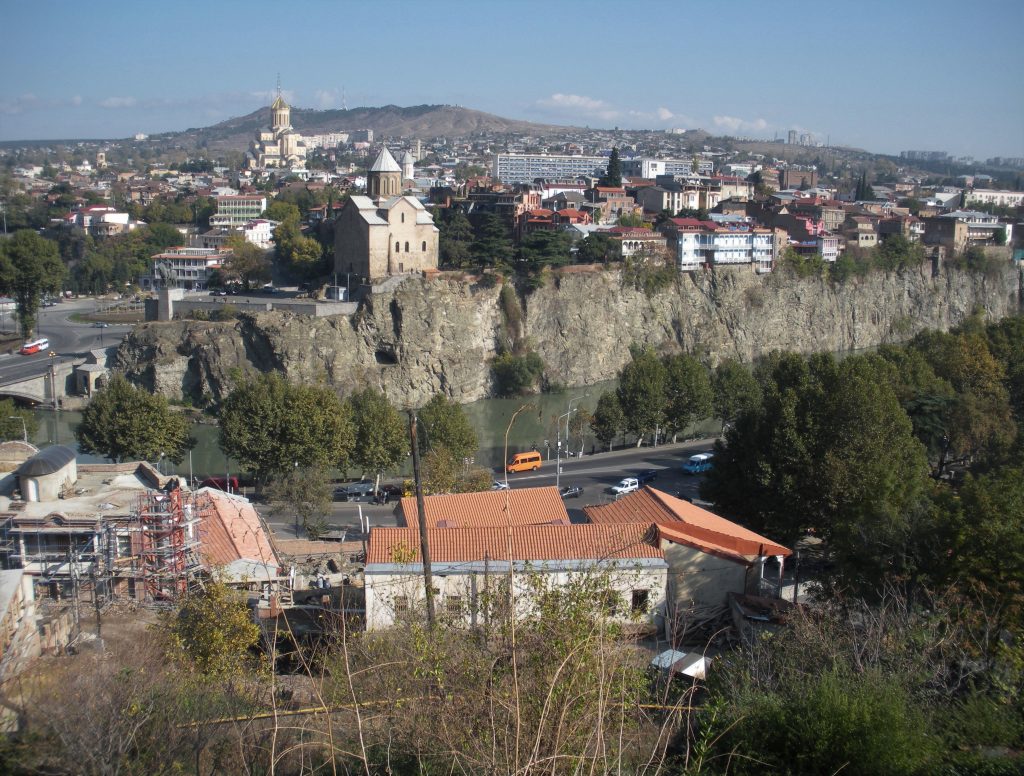
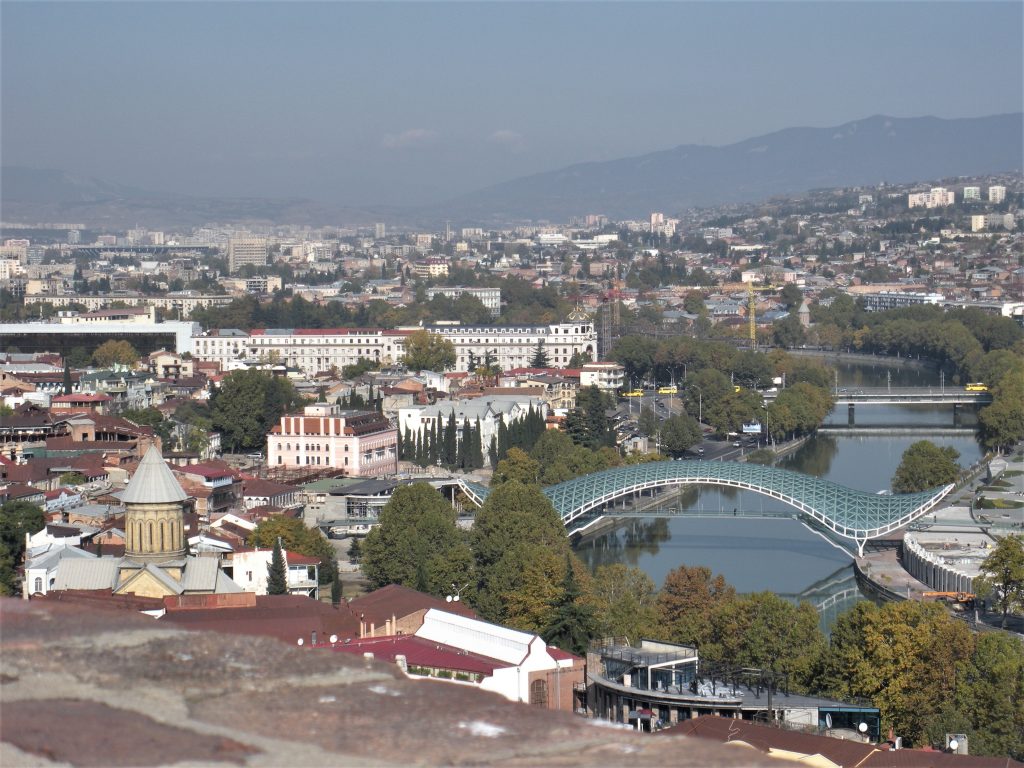
We admired the views, shot a few photos and started our descent. On the way down we stopped in the church for a moment. Covering my head with my scarf, I stepped in to find an atmosphere more homelike than sacred, in spite of the lingering scent of frankincense. Two tables stood inside the sanctuary, heaped with loaves of bread, whole cheeses, tomatoes, cucumbers, persimmons, grapes, walnuts and almonds in the shell, and grocery items like coffee, honey, and jars of mixed pickles, as well as piles of used clothing, neatly folded. Several priests chatted casually with a group of men and women, standing in the sunlight that streamed into the deep chapel. We couldn’t tell whether they were preparing for a wedding feast or a church picnic; later we learned from the Georgians in Jim’s office that the food and clothing were charitable offerings. People who cannot feed or clothe themselves and their families come to certain churches on Saturdays to receive help from others in the congregation.
Once again down in the old city, we stopped for lunch at a small restaurant that specializes in the many regional varieties of a savory Georgian bread called khatchapuri. We shared a wonderfully crusty and chewy boat-shaped bread filled with spiced red beans called “lobio,” along with a salad of chopped
tomatoes, cucumbers, parsley, sweet onions and green chilies. Fresh from the wood-fired oven, the bread burned our fingers as we pulled it apart, dipping chunks into the savory bean soup in the center.